Summary
This brief is published for September 21, 2026 in Asia/Shanghai and prioritizes freight information published or updated on September 20. Because fewer than six highly relevant public freight updates were available from September 20, one September 18 fleet-renewal item is included as market context. Port risk is visible in planned protests around Chattogram’s largest container terminal and in China’s push for smarter, greener and more coordinated port clusters. Maritime risk remains tied to Hormuz compliance, sanctions screening, insurance and payment pathways. Multimodal signals are stronger as Jiaxing plans a Yangtze River Delta river-sea hub and Jinan reports 937 China-Europe train departures in the first eight months.
Key Updates
Select a headline to expand the full update.
The Maritime Executive reported on September 20 that Chattogram port workers plan peaceful protests from September 22 against the proposed lease of the New Mooring Container Terminal to an outside operator. NCT is Chattogram’s largest container terminal and handles nearly half of the port’s container volume; a similar dispute in February affected port operations for almost two weeks. For Bangladesh textile, apparel and consumer-goods supply chains, near-term bookings should check terminal status, cutoffs, truck appointments and alternative gateway options early.
Source: Chattogram Port Workers Plan Protests Over Privatization DealThe Maritime Executive reported on September 20 that the U.S. Treasury again targeted a sanctions-evasion network linked in the report to disputed Strait of Hormuz toll collection. For cargo involving Gulf states, Iraq, eastern Saudi Arabia, UAE redistribution points and energy equipment, the risk is not only freight cost or diversion. Shippers should also screen carriers, vessels, sanctioned parties, payment paths, insurance coverage and destination compliance documents before booking sensitive lanes.
Source: IRGC Profiteer Babak Zanjani Skims Iran’s Hormuz TollsThe Maritime Executive reported on September 18 that Maersk confirmed orders for 26 large containerships, each with 18,600 TEU capacity and dual-fuel engines able to use liquefied gas, with delivery expected in 2029 and 2030. This is older market context rather than previous-day news, but it remains relevant for long-term contracts and network planning. The order will not ease immediate peak-season space, but it can influence late-decade east-west capacity, replacement tonnage and low-carbon fuel negotiations.
Source: Maersk Confirms Reports of Large New Ship OrderChina’s Ministry of Transport reposted on September 20 that port and shipping associations from Shanghai, Tianjin, Shandong, Jiangsu, Zhejiang, Fujian, Guangdong, Chongqing and other stakeholders met in Tangshan. The agenda covered smart ports, green transition, regional coordination, low-carbon container terminals, IGV automated transport, multimodal logistics and dangerous-goods safety management, with discussion of information sharing, group standards and mutual recognition of technical achievements. For shippers, port service quality is shifting from single-port capacity toward coordinated port-cluster capability.
Source: 九省(市)港口(航)协会联席会议在唐山举行China’s Ministry of Transport reposted on September 20 that Jiaxing plans to build a port-industry-linked and efficiently connected Yangtze River Delta river-sea intermodal hub by 2030. Targets include 50 berths of 10,000 tonnes or above at Jiaxing Port, 6 million TEUs of container throughput, 1.2 million TEUs at the inland river port and 2 million TEUs of river-sea intermodal containers. Yangtze River Delta exporters can watch inland-waterway links as a way to reduce short-haul trucking pressure, improve lower-carbon transport options and diversify port-congestion exposure.
Source: 嘉兴5年内建成长三角海河联运枢纽港China’s Ministry of Transport reposted on September 20 that Jinan ran 937 China-Europe freight trains in the first eight months of 2026, up 27.3% year on year and accounting for 46.5% of Shandong’s total. The network has north, central and south corridors, balanced two-way operations, 15 stable routes and reach to 25 countries. The report also noted that some Shandong manufacturers shortened transport time from 40 days by sea to 12 days using timetable-based China-Europe trains. For machinery, equipment, components and higher-value cargo, rail can complement ocean freight uncertainty, but schedules, border crossings, mixed-load rules and overseas delivery responsibility still need shipment-level checks.
Source: 中欧班列串起“齐鲁造”国际朋友圈DH Logistics View
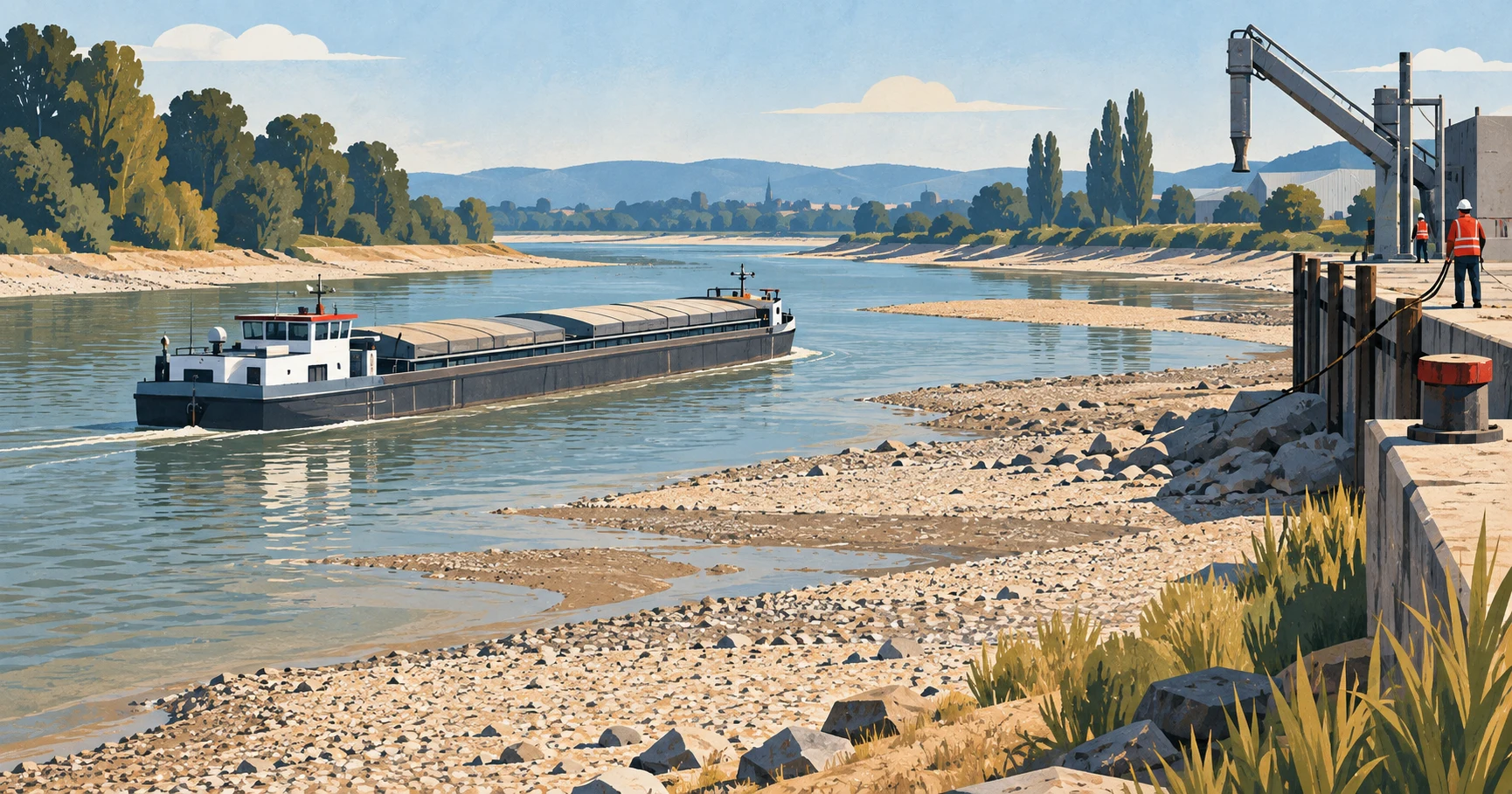
- Today’s signals point to one operating theme: international freight is moving from choosing one cheap lane to managing a portfolio of node risks. Port protests, Gulf compliance, river water levels, port-cluster coordination and China-Europe trains can all change actual delivery time and exception cost.
- DH Logistics recommends segmenting late-September shipments by risk profile. Bangladesh and South Asia bookings should check port operating windows; Gulf-related cargo should front-load sanctions and insurance screening; Yangtze River Delta cargo should compare river, ocean and rail combinations; and Shandong or North China manufacturers can treat China-Europe trains as one higher-certainty option while checking border, space, loading and overseas delivery responsibility per shipment.
Planning Notes
- For Bangladesh-bound cargo, confirm Chattogram terminal status, truck appointments, cutoffs and alternative gateway options early.
- For Hormuz, Gulf and Iran-adjacent risk lanes, screen vessels, carriers, payment paths and insurance coverage before booking.
- For long-term ocean contracts, monitor late-decade newbuilding deliveries, fuel strategy and fleet replacement instead of only current spot rates.
- For Yangtze River Delta exports, compare inland river ports, seaports and rail nodes in one total-cost and reliability model.
- Use China-Europe trains for higher-value or schedule-sensitive cargo where ocean risk is high, while defining border transfer, mixed-load rules, overseas delivery and exception responsibility.
- For dangerous goods, energy equipment and highly regulated cargo, move port standards, document consistency and inspection appointments into the quotation stage.
Sources
View sources (6)
- International · Industry mediaChattogram Port Workers Plan Protests Over Privatization DealThe Maritime Executive · 2026-09-20
- International · Industry mediaIRGC Profiteer Babak Zanjani Skims Iran’s Hormuz TollsThe Maritime Executive · 2026-09-20
- International · Industry mediaMaersk Confirms Reports of Large New Ship OrderThe Maritime Executive · 2026-09-18
- China · Official institution九省(市)港口(航)协会联席会议在唐山举行交通运输部 · 2026-09-20
- China · Official institution嘉兴5年内建成长三角海河联运枢纽港交通运输部 · 2026-09-20
- China · Industry media中欧班列串起“齐鲁造”国际朋友圈中国交通新闻网 · 2026-09-20