Summary
This brief is published for September 18, 2026 in Asia/Shanghai and prioritizes freight information published or updated on September 17. Ocean freight remains split: transpacific rates are supported by pre-Golden Week demand and capacity management, while Asia-Europe lanes face pressure from Suez service restoration and softer demand. China's port and corridor news is another major theme, with Tianjin Port channel deepening, the Pinglu Canal opening and the Trans-Caspian corridor all pointing to stronger large-vessel, river-sea and Eurasian alternative-route capacity. Risk remains visible in Black Sea merchant shipping and Mediterranean port protests, while air cargo networks continue to add Central Asia perishables coverage and global ground-handling consistency.
Key Updates
Select a headline to expand the full update.
Drewry's September 17 World Container Index rose 1% to $4,500 per 40-foot container, driven mainly by higher transpacific rates. Shanghai-Los Angeles rose 5% to $7,712 per FEU and Shanghai-New York rose 7% to $10,394 per FEU, while Shanghai-Genoa fell 5% to $4,016 per FEU and Shanghai-Rotterdam dropped 9% to $3,626 per FEU. Drewry also noted more blank sailings before Golden Week, longer Shanghai waiting time and Red Sea security risks that could affect Suez restoration. Exporters should plan bookings, blank sailings, destination congestion and route risk together instead of relying only on a single weekly rate.
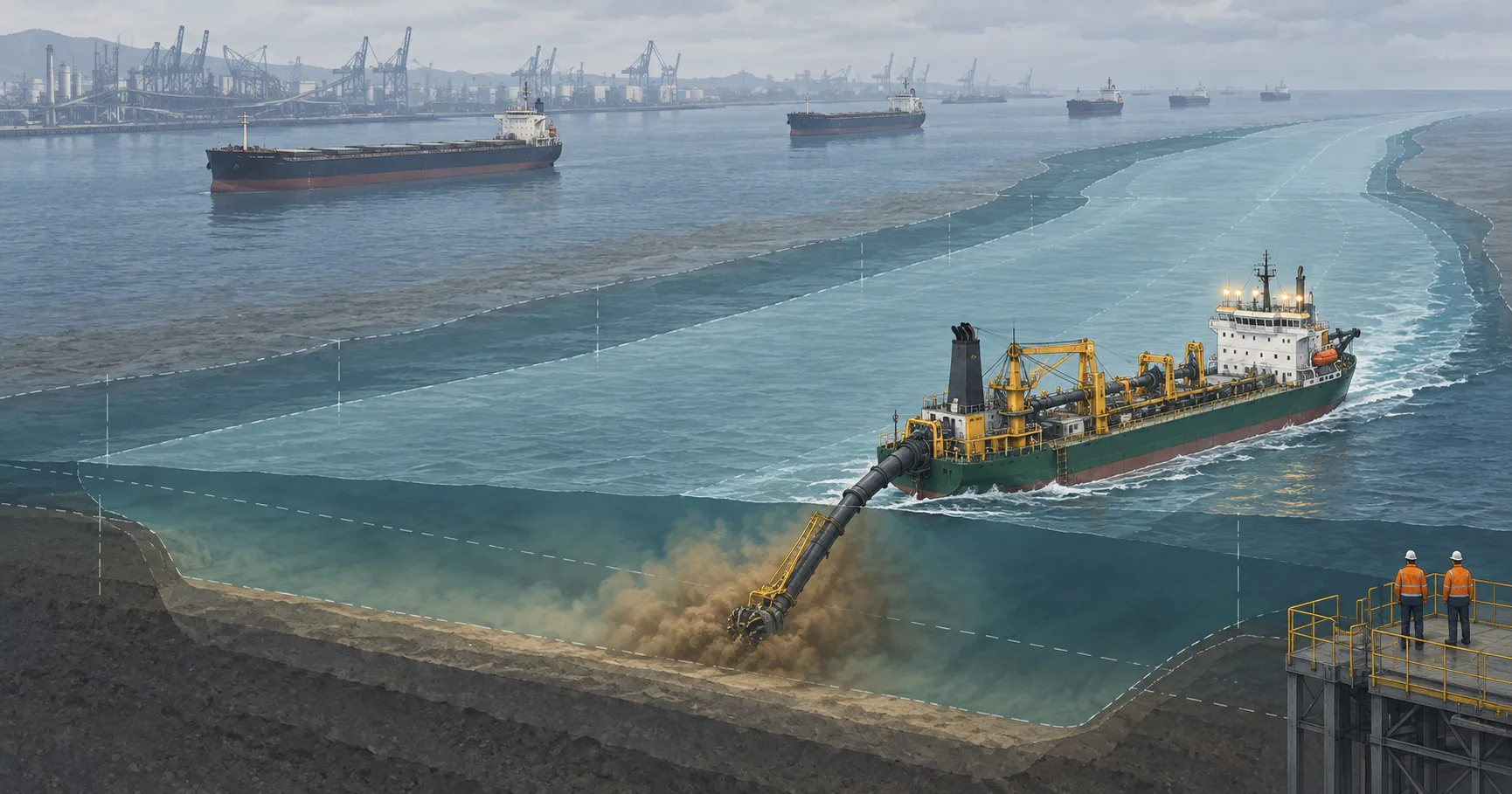
Source: World Container Index - 17 SepChina's Ministry of Transport reposted a China Water Transport update on September 17 saying Tianjin Port's Xingang channel widening and deepening project has begun offshore construction. The project is located north of Nanjiang port area, covers 21.348 km of channel widening and deepening, involves about 14.97 million cubic meters of dredging and has a total investment of about RMB 1.254 billion. It is designed for two-way navigation by 300,000-dwt vessels. Once completed, it should improve large-vessel access and navigation efficiency, which matters for bulk, energy, breakbulk and large-vessel berth planning in North China.
Source: 天津港新港航道拓宽浚深工程开工China's Ministry of Transport reported on September 17 that the Pinglu Canal formally opened on September 16. The 134.2-km canal is built to Class I inland-waterway standard, can handle 5,000-dwt vessels and links the Xijiang River system with the Beibu Gulf international hub port. The report says upstream and midstream regions can cut the north-south sea-bound distance by about 560 km and may save more than RMB 5 billion in annual transport costs. For Southwest China exporters, the canal can change the full-route cost and transit-time mix for rail, inland-waterway and ocean services, especially for ASEAN and Beibu Gulf cargo.
Source: 我国建成西南地区通江达海新通道China Transportation News reported on September 17 that a Trans-Caspian China-Europe train loaded with machinery, electronics and daily goods departed the China-Kazakhstan Lianyungang logistics cooperation base, exited via Horgos, crossed Kazakhstan, moved by sea barge from Aktau and reached Baku, cutting the previous transit time by about five days. The report also said more than 10,000 international road vehicles used the China-Europe Trans-Caspian direct corridor in the past year, with freight volume reaching 84,700 tonnes, up 55.6% and 46.8% year over year respectively. The corridor can supplement traditional rail and ocean routes, but shippers still need to confirm transloading points, customs documents, overseas warehouses and liability boundaries shipment by shipment.
Source: 天山脚下黄金通道向亚欧延展The Maritime Executive reported on September 17 that a Turkish shipowner, the family of a killed crewmember and surviving crewmembers filed a complaint with the International Criminal Court over the July 22 attack on the Turkish-flagged bulker Reyhan Sari near Novorossiysk. The vessel had loaded coal at Russia's Taman port for Turkey and was hit by a drone, killing one crewmember and injuring others. Black Sea security risk remains material for coal, grain, steel and breakbulk movements, so contracts tied to the region should define war-risk insurance, diversion, demurrage, force majeure and crew-safety responsibilities.
Source: Turkish Owner and Crew File War Crimes Complaint Over Ukrainian Ship AttackThe Maritime Executive reported on September 17 that French fishermen protesting fuel prices and support measures blocked Mediterranean harbors including Sète and Nice. Corsica Ferries cancelled some sailings, a ferry at Nice was forced to wait offshore and an oil depot near Fos-sur-Mer was also targeted. Although the report focuses on ferry and fishing activity, it is a useful warning for Mediterranean port and hinterland planning: fuel prices and social protests can quickly become questions about port access, trucking schedules and alternate gateways.
Source: French Fishermen Block Med Ports in Fuel Protest, Disrupting Ferry ServiceAir Cargo News reported on September 17 that SolitAir is adding Uzbekistan to its network with a focus on perishables. The report noted that air transport operators handled 57,200 tonnes of cargo across Uzbekistan in the first half of 2026, with around 20-tonne cargo demand in focus. For perishables, samples and small high-value shipments moving between Central Asia and the Middle East, new freighter coverage can improve transit options, but shippers should still check temperature handoffs, airport handling capability, flight frequency and destination clearance windows.
Source: SolitAir adds Uzbekistan to network with focus on perishablesAir Cargo News reported on September 17 that Etihad Airways and Swissport expanded their global cargo partnership across airports in Africa, Europe, North America, the Middle East and Asia. For air shippers, airline-ground handler alignment can affect acceptance, breakdown, cold-chain handoff, exception escalation and pre-delivery visibility. Healthcare, electronics, e-commerce and high-value cargo owners should check whether carriers have consistent station SOPs and service levels at key transfer points.
Source: Etihad Airways and Swissport expand global cargo partnershipDH Logistics View
- Today's market signal is clear: prices, corridors and risk are all diverging at the same time. Transpacific rates are supported before Golden Week, Asia-Europe is pressured by Suez restoration and softer demand, and Chinese port-channel and canal projects improve long-term flow capacity while short-term bookings still depend on blank sailings, waiting time and destination handling.
- DH Logistics recommends splitting late-September shipments into three operating groups. For transpacific and U.S.-bound cargo, prioritize space and pickup resources. For Southwest China, North China and Eurasian multimodal cargo, test whether new corridors can lower door-to-door cost. For Black Sea, Mediterranean and temperature-sensitive or high-value air cargo, focus on insurance, alternate routes, temperature handoffs and exception escalation.
Planning Notes
- For transpacific shipments, confirm blank sailings, cut-offs and destination appointments before Golden Week instead of deciding from the weekly ocean rate alone.
- For North China bulk, energy and breakbulk cargo, track Tianjin channel construction progress and future impacts on large-vessel access and tidal waiting time.
- For Southwest China to ASEAN cargo, compare Pinglu Canal, rail-sea and traditional road or coastal transshipment options by full-route cost and transit time.
- For Eurasian cargo considering the Trans-Caspian corridor, verify transloading points, overseas customs files, warehouse links and last-mile liability shipment by shipment.
- For Black Sea bulk and breakbulk contracts, define war-risk insurance, diversion, demurrage, force majeure and crew-safety clauses.
- For southern France and Mediterranean gateway cargo, monitor protests, fuel prices and alternate-port plans before cargo arrives.
- For Central Asia perishables or healthcare air freight, confirm temperature handoffs, airport handling capability, flight frequency and destination clearance windows.
- For high-value air cargo, favor carrier and transfer-point combinations with consistent ground-handling SOPs and clear exception escalation.
Sources
View sources (8)
- International · Research institutionWorld Container Index - 17 SepDrewry · 2026-09-17
- China · Official institution天津港新港航道拓宽浚深工程开工交通运输部 · 2026-09-17
- China · Official institution我国建成西南地区通江达海新通道交通运输部 · 2026-09-17
- China · Industry media天山脚下黄金通道向亚欧延展中国交通新闻网 · 2026-09-17
- International · Industry mediaTurkish Owner and Crew File War Crimes Complaint Over Ukrainian Ship AttackThe Maritime Executive · 2026-09-17
- International · Industry mediaFrench Fishermen Block Med Ports in Fuel Protest, Disrupting Ferry ServiceThe Maritime Executive · 2026-09-17
- International · Industry mediaSolitAir adds Uzbekistan to network with focus on perishablesAir Cargo News · 2026-09-17
- International · Industry mediaEtihad Airways and Swissport expand global cargo partnershipAir Cargo News · 2026-09-17