Summary
This brief is published for September 23, 2026 in Asia/Shanghai and prioritizes freight information published or updated on September 22. In ocean freight, global container schedule reliability weakened again, with Far East-Europe service under the greatest stress. In Europe, low Rhine water is reducing barge capacity and pushing pressure into rail, road and port yards. In air cargo and multimodal logistics, Hacis is extending a customs-bonded road feeder network from Hong Kong toward Vietnam, showing how Southeast Asian cargo is looking for more flexible regional transfer options. Policy and infrastructure signals from the FMC, Alabama, Shenzhen and China civil aviation regulators all point to earlier checks on compliance, inland execution and exception cost.
Key Updates
Select a headline to expand the full update.
FreightWaves reported on September 22, citing Xeneta, that global container vessel schedule reliability fell to 29% in August, down four percentage points from July, while average delay rose from 4.2 days to 5.1 days. Far East-Europe reliability fell to 6%, with average delay at 8.2 days. Typhoons in China, North European port congestion, Red Sea diversions and longer berth stays for large ships are all reducing effective capacity. With China’s Mid-Autumn Festival and Golden Week approaching, exporters should build buffers around cutoffs, equipment availability, destination pickup and inland follow-on moves.
Source: New report: Just a third of container shipping on-timeFreightWaves reported on September 22 that the shallow middle Rhine had fallen 16 centimeters below the low-water threshold, with transport toward Switzerland and southern Germany nearly stopped. Barges must wait, reduce payload or shift cargo to other modes, while rail and road cannot quickly absorb the large volumes normally handled by inland waterways. Cargo entering Germany, Switzerland or Eastern Europe via Rotterdam and Antwerp should secure rail, road or combined multimodal capacity early and budget for detention, demurrage, alternative-port and inland waiting costs.
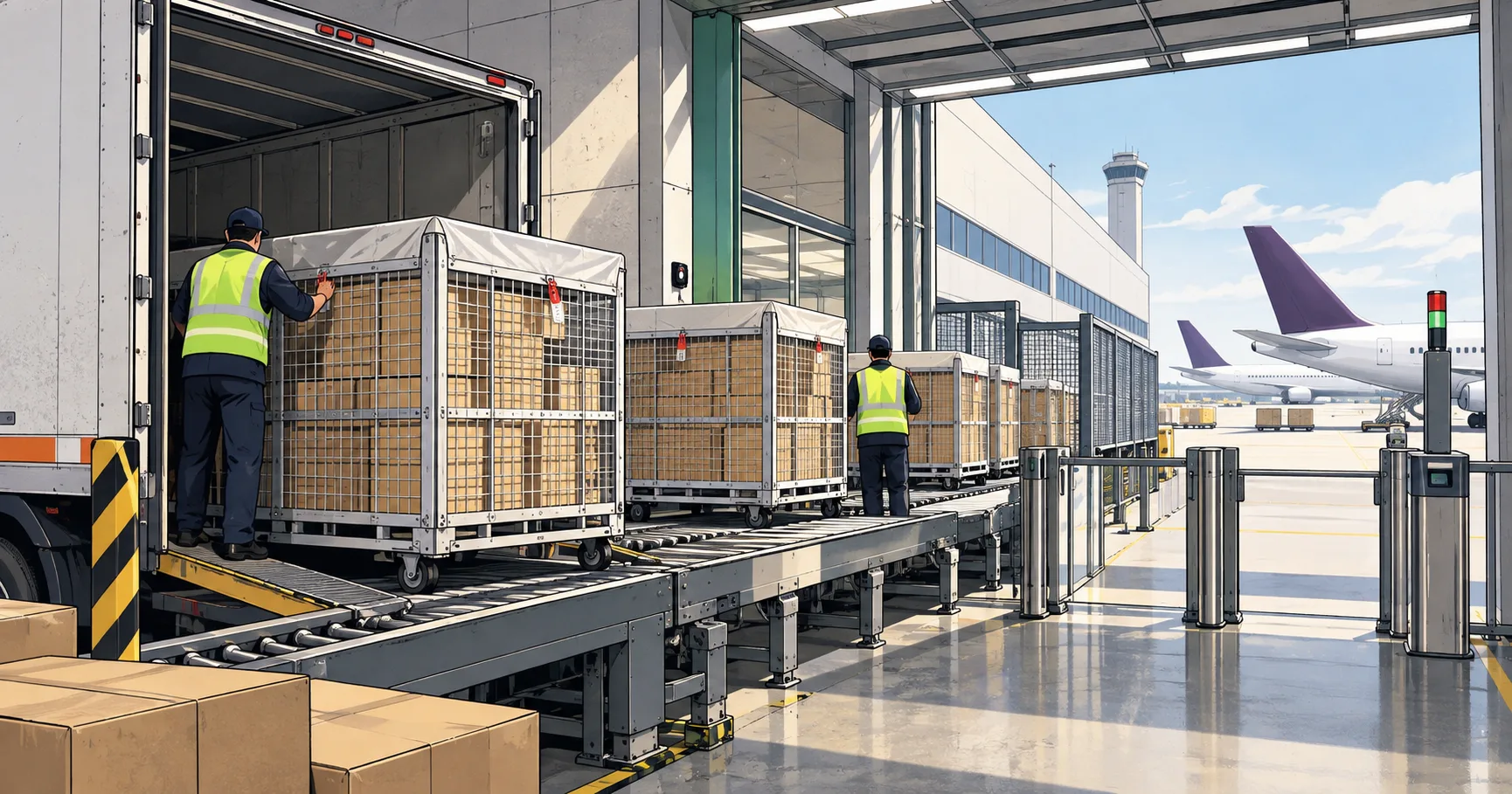
Source: Record-low Rhine levels choke barge traffic, stress ground transportAir Cargo Week reported on September 22 that Hacis, the logistics arm of Hong Kong Air Cargo Terminals, has extended its SuperLink China Direct service to Vietnam and completed a trial shipment under the Single E-lock Scheme. The pilot moved cargo by truck from Vietnam to Wuzhou, then onward to Hong Kong through Hacis customs-bonded road feeder services. The model adds an option beyond traditional ocean freight and direct flights for Vietnam, Mainland China and Hong Kong cargo, especially for e-commerce, electronics, samples and urgent replenishment.
Source: Hacis extends SuperLink China Direct service to VietnamgCaptain, republishing The Loadstar, reported on September 22 that the U.S. Federal Maritime Commission confirmed there is no three-year statute of limitations for charge complaints tied to fees assessed on or after June 16, 2022, and that complaints can be filed through small-claims or formal processes. Carriers still need to prove that the charges were reasonable. Shippers, NVOCCs and importers that paid heavy detention, demurrage or congestion-period charges should organize bills of lading, container events, invoices, payment records and correspondence for legal or compliance review.
Source: FMC Change Could Revive Older Detention and Demurrage ClaimsFreightWaves reported on September 22 that the Alabama Port Authority’s Montgomery Intermodal Container Transfer Facility remains on track for an early-2027 opening. The roughly $100 million, 272-acre project will connect the Port of Mobile with central Alabama manufacturers, distributors and exporters by CSX rail, with expected annual capacity of about 60,000 container units. For U.S. Southeast importers and exporters, the inland-port model can reduce long drayage exposure, but near-term planning still needs shipment-level checks on rail schedules, port cutoffs, local trucking and free time.
Source: New $100M inland rail terminal will handle 60,000 TEUs a yearShip.sh published a September 21 market-context analysis arguing that geopolitical conflict, extreme weather and channel restrictions are slowing global trade flows and making container, tanker and related surcharges more frequent and normalized. Although this source is one day earlier than the main news window, it supports the September 22 signals on schedule reliability and low-water risk. Shippers should not quote only from base ocean freight; low-water, congestion, diversion, fuel, insurance, destination waiting and rerouting triggers should be checked shipment by shipment.
Source: 航运行业迎来全新新常态:贸易放缓、成本高企、利润狂飙China Transport News reported on September 22 that Shenzhen zero-carbon linehaul fleets have opened pilot freight routes from Shenzhen to Jiangxi, Guangxi, Shaoguan and Heyuan, with some one-way distances exceeding 500 kilometers. Shenzhen’s first two zero-carbon fleets now include 540 new-energy heavy trucks, previously focused mainly on Yantian port drayage, Pearl River Delta city-to-city moves and Shenzhen-Hong Kong cross-border transport. For exporters, green linehaul can support ESG and lower-carbon logistics claims, but quotes still need checks on route stability, charging coverage, payload, transit time and contingency charging.
Source: 深圳试点新能源重卡跨省干线运输The Civil Aviation Administration of China reported on September 17 that its Northeast and Southwest regional administrations jointly inspected dangerous-goods air transport in Jilin, covering carriers, ground handlers and cargo warehouses. The checks focused on training, agent management, dangerous-goods storage, emergency response, manuals, information notices, safety-management systems and credit management. Although this source is earlier than the main news window, it remains operationally useful for late-September air cargo: lithium batteries, chemicals, powered goods and possible dangerous goods should have MSDS, UN number, packaging, declaration and carrier-acceptance standards confirmed before booking.
Source: 东北局联合西南局对吉林辖区危险品航空运输开展交叉检查DH Logistics View
- Today’s main signal is not a single freight rate but the importance of executable routing. Ocean schedule reliability, low Rhine water, normalized surcharges and inland hub investment all show that booking space is only the first step; port, inland, insurance and exception handling determine final delivery.
- DH Logistics recommends three checks for late-September shipments. First, validate the main service and cutoff reliability. Second, confirm destination-port, river, rail, road or air-road transfer resources. Third, confirm dangerous-goods documents, detention and demurrage evidence, insurance and claim records. For Southeast Asia and South China cargo, compare Hong Kong customs-bonded air-road options, Shenzhen green linehaul and conventional ocean or air freight in one routing table.
Planning Notes
- For Far East-Europe and North America cargo, lock space, empty equipment and cutoff buffers early instead of planning only from carrier ETDs.
- For freight entering inland Europe through Rotterdam or Antwerp, price barge, rail, truck and combined multimodal options, including low-water surcharges.
- For time-sensitive Vietnam, South China and Hong Kong cargo, evaluate customs-bonded road feeder plus Hong Kong air freight as an alternative path.
- For disputed historical U.S. detention and demurrage bills, organize bills of lading, container events, invoices and correspondence for compliance or legal review.
- For U.S. Southeast cargo, monitor Mobile-Montgomery inland-port development while still checking current rail schedules and local trucking shipment by shipment.
- For lithium batteries, chemicals, powered goods and possible dangerous goods, confirm MSDS, UN number, packaging group, declaration and carrier acceptance before air booking.
Sources
View sources (8)
- International · Industry mediaNew report: Just a third of container shipping on-timeFreightWaves · 2026-09-22
- International · Industry mediaRecord-low Rhine levels choke barge traffic, stress ground transportFreightWaves · 2026-09-22
- International · Industry mediaHacis extends SuperLink China Direct service to VietnamAir Cargo Week · 2026-09-22
- International · Industry mediaFMC Change Could Revive Older Detention and Demurrage ClaimsgCaptain / The Loadstar · 2026-09-22
- International · Industry mediaNew $100M inland rail terminal will handle 60,000 TEUs a yearFreightWaves · 2026-09-22
- China · Industry media航运行业迎来全新新常态:贸易放缓、成本高企、利润狂飙航运界 · 2026-09-21
- China · Industry media深圳试点新能源重卡跨省干线运输中国交通新闻网 · 2026-09-22
- China · Official institution东北局联合西南局对吉林辖区危险品航空运输开展交叉检查中国民用航空局 · 2026-09-17