Summary
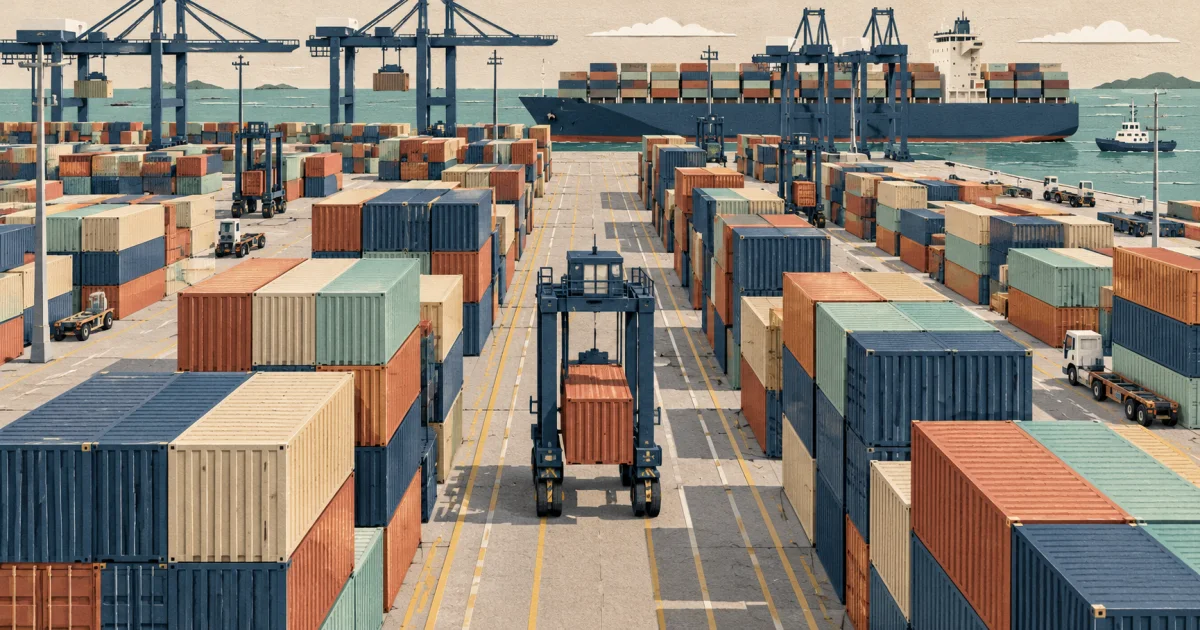
Reports published on September 30 point to a reshaping of Gulf transshipment networks amid Hormuz disruption, while congestion at Asian ports has pushed global liner reliability to a near four-year low. U.S. rail intermodal volumes reached a yearly high as cost savings drew freight from trucking, although tighter capacity may pressure Q4 rates. CMA CGM raised late-October FAK rates from Asia to the Mediterranean and North Africa; IATA’s latest monthly data show air-cargo demand growing as total capacity edged down. In China, Lianyungang launched a Eurasian sea–land data corridor and the Ministry of Transport issued a strong-wind forecast for Bohai and Yellow Sea waters; a green-methanol bunkering trial at Nansha adds longer-term fuel context.
Key Updates
Select a headline to expand the full update.
The Loadstar, citing Drewry port and terminal analysis, says Hormuz disruption and higher insurance costs have pushed carriers to shift relay calls toward alternatives including Fujairah, Sohar, Salalah, Colombo, Vizhinjam, and Jeddah. Drewry argues that price-sensitive relay boxes may not automatically return after the conflict because networks are being redesigned. Jebel Ali is still expected to retain a substantial regional role through its free zone, warehousing, and industrial base.
Source: Hormuz closure a fatal blow for Dubai and Abu Dhabi transhipment volumesFreightWaves data show the seven-day average of loaded U.S. domestic intermodal containers reached 21,697 on September 28, about 8% above a year earlier and a new annual high. The Intermodal Contract Savings Index was about 30.9%, with savings near 43% on the Harrisburg–Atlanta lane versus spot trucking. Continued volume growth could tighten Q4 capacity and put upward pressure on rates.
Source: Intermodal Hits Annual High (21K+ Containers)PortCalls, citing Sea-Intelligence’s latest liner performance report, says global schedule reliability fell 5.9 percentage points month on month to 49.9% in August, the lowest since September 2022. Average delay for late vessel arrivals rose by 0.60 days to 6.81 days. The report points to persistent congestion at Asian ports, so shippers should build port, weather, and inland-connection buffers into arrival and inventory plans.
Source: Global delays in vessel movement worsened in Aug amid Asian ports congestionContainer News reports that CMA CGM will raise FAK rates from major Asian ports to the western and eastern Mediterranean, Adriatic, Black Sea, and North Africa for October 19–31. Published 40-foot rates range from US$4,600 to US$6,900 and apply to dry, reefer, out-of-gauge, and paying-empty containers. Shippers should confirm the destination band and contract validity for each booking.
Source: CMA CGM raises Asia–Mediterranean FAK ratesIATA’s August data, released on September 29, show global cargo tonne-kilometers grew 4.4% year on year, with international demand up 5.3%, while total capacity fell 0.1%. Asia–North America demand rose 13.2% for a seventh consecutive month of growth. Jet fuel prices were 79.2% higher year on year in August, keeping cost pressure elevated.
Source: Air Cargo Demand Grows 4.4% in AugustA September 30 marine forecast carried by China’s Ministry of Transport expected force-7 winds, gusting to force 8, across much of the Bohai Sea, Bohai Strait, and Yellow Sea from 08:00 September 30 to 08:00 October 1. The notice urged vessels, facilities, and crews to prepare for shelter. Affected sailings should follow port and carrier advisories and allow time for berthing and cargo operations.
Source: 2026年9月30日06时海洋天气公报China’s Ministry of Transport reported on September 30 that a new Eurasian sea–land data corridor in Lianyungang has connected port, rail, maritime, and logistics systems, collecting 31 categories of shipment events and linking five hub platforms in China and Kazakhstan. The ministry says the service is intended to improve train and cross-border customs visibility and reduce processing steps.
Source: 新亚欧陆海联运数据大通道上线Guangzhou’s port authority said on September 29 that Nansha Port completed its first ship-to-ship delivery of about 300 tonnes of green methanol to an international container liner. The trial extends local bunkering from terminal-side operations to anchorage and adds an operating example for low-carbon marine fuel, although scaling will depend on supply and cost.
Source: 广州港南沙港区完成首单国际集装箱班轮绿色甲醇加注DH Logistics View
- This edition points to network reliability and node costs moving together: Gulf relay cargo may migrate as carriers redesign routes, while Asian port congestion has lowered schedule reliability. At the same time, rail intermodal’s cost advantage and China’s cross-border digital corridor are expanding organizational alternatives. Base delivery and pricing decisions on the named sailing, port calls, and transfer points rather than projecting short-term figures across every lane.
- Air demand, ocean pricing, and regional weather are moving on different timelines. Put rate validity, space confirmation, schedule buffers, inland connections, and weather notices into one operating plan, while tracking fuel costs and low-carbon fuel availability as longer-term service factors.
Planning Notes
- For Gulf and Middle East cargo, confirm current transshipment ports, war-risk insurance, and surcharge terms with the carrier, and prepare alternatives such as Salalah or Colombo only after availability is confirmed.
- Build schedule buffers for Asian port departures using recent congestion and reliability data; ask suppliers to share changes to cutoffs, calls, and inland transfers promptly.
- For late-October Asia–Mediterranean and North Africa shipments, verify the applicable CMA CGM FAK band, validity dates, container type, and contract-rate treatment for each booking.
- Compare rail intermodal with road options where the cargo fits, and confirm Q4 train, drayage, and terminal capacity before shifting committed volumes.
- For cargo moving through the Bohai Sea, Bohai Strait, and Yellow Sea, follow current weather and port advisories; monitor Nansha green-methanol supply and cost for longer-term procurement planning.
Sources
View sources (8)
- International · Industry mediaHormuz closure a fatal blow for Dubai and Abu Dhabi transhipment volumesThe Loadstar · 2026-09-30
- International · Industry mediaIntermodal Hits Annual High (21K+ Containers)FreightWaves · 2026-09-30
- International · Industry mediaGlobal delays in vessel movement worsened in Aug amid Asian ports congestionPortCalls Asia · 2026-09-30
- International · Industry mediaCMA CGM raises Asia–Mediterranean FAK ratesContainer News · 2026-09-30
- International · Industry associationAir Cargo Demand Grows 4.4% in AugustIATA · 2026-09-29
- China · Official institution2026年9月30日06时海洋天气公报交通运输部 / 中央气象台 · 2026-09-30
- China · Official institution新亚欧陆海联运数据大通道上线交通运输部 / 中国水运网 · 2026-09-30
- China · Official institution广州港南沙港区完成首单国际集装箱班轮绿色甲醇加注广州市港务局 · 2026-09-29